

Dental crowns are one of the most common restorative dental procedures. Whether it’s due to a cracked tooth, a large filling, or after a root canal, dental crowns provide a durable solution that restores function and appearance to damaged teeth. But when people consider getting a crown, one of the most common questions is: Do dental crowns hurt? It’s understandable to be concerned about pain, especially during dental procedures. But rest assured, most of the discomfort associated with dental crowns is minimal, and with the right care, you’ll find the process much more comfortable than you might expect.
In this blog, we’ll guide you through what to expect during your dental crown treatment, including potential pain, the procedure itself, and the recovery process afterward. We’ll also discuss how to manage any discomfort and what makes dental crowns such a reliable solution.
What Is a Dental Crown?
A dental crown is a tooth-shaped cover that fits over a damaged or decayed tooth, effectively restoring its strength, shape, and appearance. Crowns can be made from a variety of materials, including porcelain, metal, or a combination of both, depending on the tooth’s location and the patient’s needs. For example, a same-day dental crown in Circleville for a back molar might be made from a stronger metal, while a front tooth crown might use a more natural-looking porcelain.
Before we talk about the pain, let’s first understand how the procedure works.
What Happens During the Dental Crown Procedure?
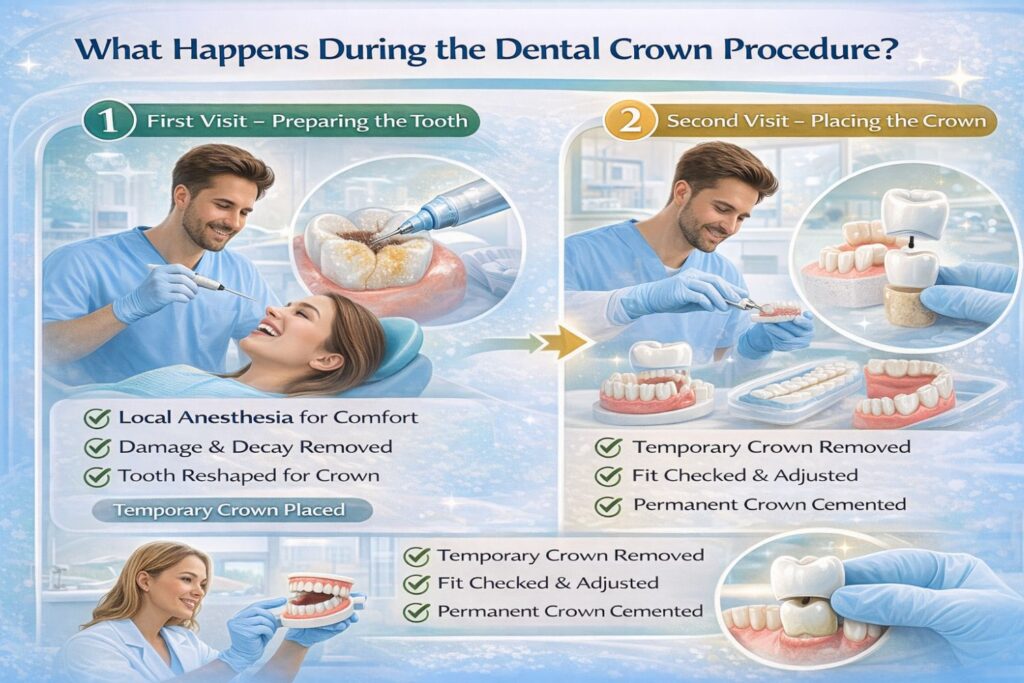
When you visit your dentist for a dental crown, the procedure generally takes two visits: one for preparation and the other for placement.
- First Visit – Preparing the Tooth:
On the first visit, your dentist will numb the affected area using local anesthesia. This ensures you are comfortable throughout the procedure. The damaged tooth is then reshaped to make room for the crown. If there’s decay, it will be removed, and the tooth will be filed down. In some cases, a buildup of material may be used to restore the tooth to an appropriate size before the crown is placed. - Second Visit – Placing the Crown:
After the custom crown is made, usually within a few days, you’ll return for the second visit. Your dentist will remove the temporary crown and place the permanent one. They will check the fit, adjust as needed, and ensure the crown aligns well with your bite. Once you’re satisfied with the fit, the crown is cemented in place.
Does Getting a Dental Crown Hurt?
For most patients, the process of getting a dental crown is relatively pain-free. Here’s a breakdown of what you can expect:
- During the Procedure:
Since your dentist will apply a local anesthetic to numb the area, you shouldn’t feel any pain during tooth preparation or crown placement. There might be some pressure or a mild sensation as the dentist reshapes the tooth or adjusts the crown, but this should not be painful. If you experience any discomfort, don’t hesitate to inform your dentist—additional numbing can be applied. - After the Procedure:
After the anesthesia wears off, it’s normal to feel some sensitivity, especially if the tooth was heavily filed down or if you had a root canal. This sensitivity can last anywhere from a few hours to a few days. You may also feel mild discomfort in your gums or a feeling of “fullness” where the crown was placed. These sensations should gradually subside. - What About Pain from the Crown?
Once the permanent crown is in place, it should feel very natural. However, if you experience ongoing pain or discomfort, it may be a sign of a problem, such as an ill-fitting crown, an underlying infection, or an bite issue. It’s important to contact your dentist in Circleville if this happens.
Tips for Managing Pain and Sensitivity After Getting a Crown
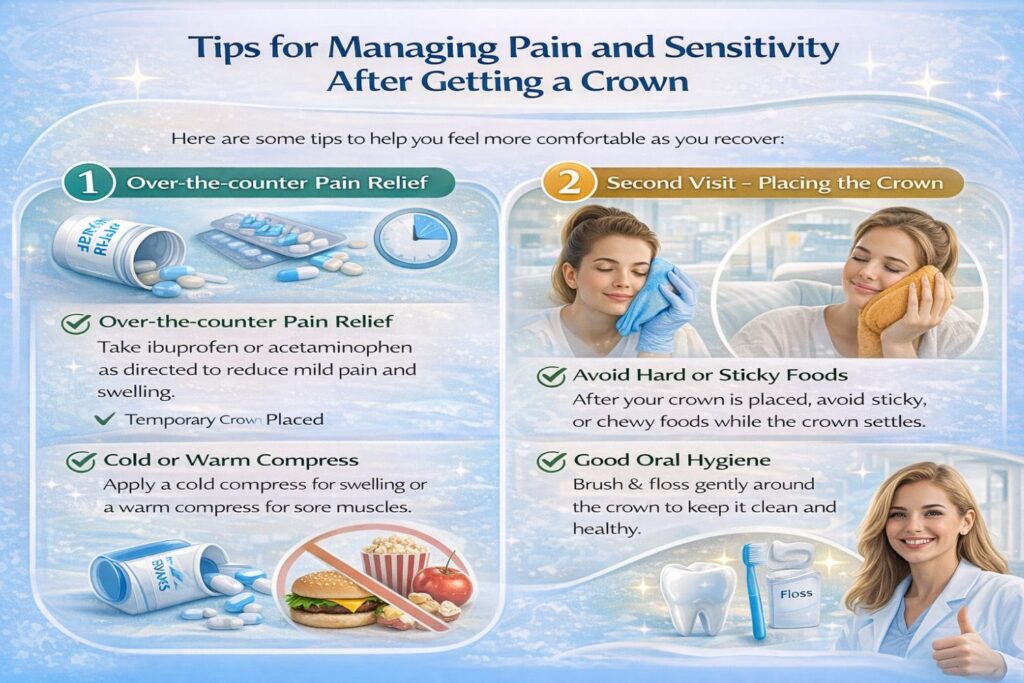
While getting a dental crown is typically not painful, it’s helpful to know how to manage any potential discomfort afterward. Here are some tips to help you feel more comfortable as you recover:
- Over-the-counter Pain Relief:
For mild pain or swelling, over-the-counter medications such as ibuprofen or acetaminophen can help manage discomfort. Be sure to follow the dosage instructions. - Avoid Hard or Sticky Foods:
After your crown is placed, avoid hard, sticky, or chewy foods until the anesthesia has completely worn off and your mouth is healed. This will help prevent accidental damage to the crown or discomfort while chewing. - Cold or Warm Compress:
Applying a cold compress to your cheek can help reduce any swelling around the affected area. If you’re experiencing jaw pain, a warm compress may help relax the muscles. - Good Oral Hygiene:
Keep the area around your crown clean by brushing and flossing regularly. Just be gentle when brushing near the crown, as the gums may still be sensitive.
How Long Will It Take to Fully Recover?
For most people, the recovery time after getting a dental crown is relatively short. Mild discomfort or sensitivity typically lasts only a few days. If you’re experiencing persistent pain or swelling, it’s important to reach out to your dentist for follow-up care. Once the crown has fully settled into place, you should be able to go back to your normal diet and activities.
Dental crowns are a safe and effective way to restore damaged teeth. While some mild discomfort is possible during the first few days after treatment, the process itself is generally pain-free thanks to local anesthesia. The benefits of a dental crown far outweigh any temporary discomfort, and with proper care, your crown will serve you well for many years.
At North Court Family Dentistry, we are committed to providing high-quality, personalized care for all our patients. If you’re considering a same-day dental crown in Circleville or have any concerns about your treatment, don’t hesitate to reach out to us. Our friendly team is here to ensure that your experience is as smooth and comfortable as possible. Book your appointment today to get started on restoring your smile!
FAQs
How long does it take to get used to a dental crown?
Most patients adapt to their dental crowns within a few days. Mild sensitivity and pressure can occur, but these symptoms usually subside within a week.
Can I eat normally after getting a dental crown?
After the anesthesia wears off, you should be able to eat normally, but it’s advisable to avoid hard, sticky foods for the first few days to prevent discomfort.
Will my crown ever feel like a natural tooth?
Yes, once you get used to it, a dental crown should feel very similar to your natural tooth, both in appearance and function.
Is there any special care required for a dental crown?
You should continue regular brushing and flossing to keep your crown and surrounding teeth healthy. Avoid grinding or clenching your teeth, which could damage the crown.
What should I do if my crown feels loose or uncomfortable?
If you experience discomfort or if your crown feels loose, contact your dentist immediately. This could indicate that the crown needs to be adjusted or replaced.